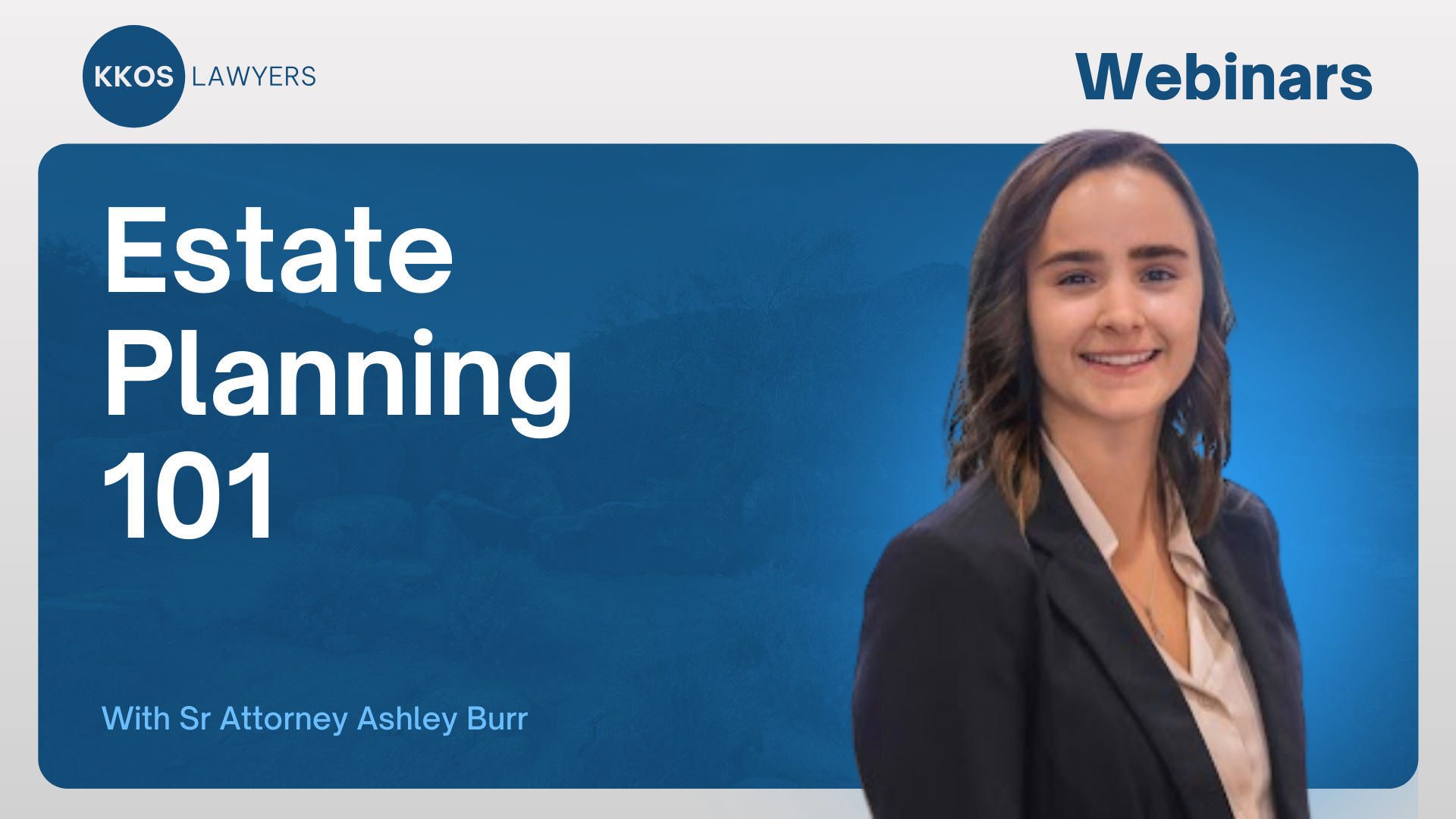
Estate Planning 101: What a Revocable Living Trust Does and How to Fund It
If you have a home, a bank account, a business, rental property, kids, pets, or digital assets, you have an estate planning problem to solve. This page includes the recorded video training with KKOS Lawyers Senior Attorney Ashley Burr and a structured breakdown of the key points so you can take action fast.
Download the slide deck to follow along: Click to Download
Watch the video: Revocable Living Trusts, Probate, and Funding
Ashley explains why a revocable living trust is the foundation of a clean estate plan, how it works with a pour over will, and why funding is what makes the plan real.
While you watch, listen for these three pillars of a strong plan:
- Probate avoidance and clean succession planning
- Privacy and control over who takes over and when
- Setting kids up for success with staged distributions and guardrails
Ready to talk to an attorney now? Book a call with KKOS Lawyers to build your estate plan package and get funding instructions tailored to your assets and state.
What you will learn in this webinar
1) Why probate is a problem you do not want your family dealing with
Probate is not just paperwork. It can be long, expensive, and public. In the video, Ashley explains why families get stuck in multi year probate situations even when the estate is not complex and why legal fees can reduce what your beneficiaries actually receive.
If your goal is a smooth transfer of assets with less court involvement, a properly funded revocable living trust is the core tool.
2) Trust vs will: why you need both documents working together
A trust handles titled assets and the plan for when and how distributions happen. A will handles personal property and guardianship designations, and it is also used to move anything not properly titled into the trust through a pour over will structure.
3) Trustee, successor trustee, executor, guardian: choosing the right people
Ashley breaks down the roles clearly:
- Trustee and successor trustee: manages the trust and finances, carries fiduciary duties, and follows the instructions in the trust
- Executor: handles the personal property process and coordinates practical items
- Guardian: cares for minor children if both parents pass away
- Health care agent: makes medical decisions if you cannot
Practical guidance from the training: pick financially capable people for trustee roles, and select guardians based on values and stability for your children. Also consider the logistics if your guardian lives in another state and whether you want the kids to relocate or stay in your home.
The most important part: Funding your trust so it actually works
A trust is paper until it is funded. Funding is what creates the probate shield.
What should be titled to your trust
- Your primary residence should be deeded into the trust (title matters)
Ashley notes that the mortgage usually stays in your name, and the deed transfer is what prevents probate on the home.
How rental property should be structured
Ashley emphasizes an important distinction:
- A revocable living trust is primarily for probate avoidance and control, not asset protection
- Rental properties should generally be owned by an LLC for liability separation
- Your trust can own the LLC membership interest so the plan still flows through the estate plan while keeping the liability barrier
If you own rentals and they are still in your personal name, that is a liability and estate planning problem. Book a call and we will map the clean structure for your state and situation.
Planning for kids: staged inheritances and built in guardrails
Handing an 18 year old a large inheritance is rarely the best outcome. In the training, Ashley walks through common staging structures such as distributing portions at ages like 25, 30, and 35, while still allowing support for major life events earlier.
Examples of allowed support before the main distribution age:
- education and training
- first car or first home support with caps
- medical needs and health insurance
- wedding support if you want it included
Common guardrails clients request:
- substance abuse or gambling restrictions tied to trustee discretion
- required financial education before distributions
- requirement to set up the child’s own estate plan before receiving funds
- prenup or postnup requirements to reduce commingling risk
Download the slide deck to follow along: Click to Download
Unique assets people forget to plan for
Ashley calls out several categories that frequently get missed:
Pets
Name a caretaker and consider leaving funds to support ongoing care.
Digital assets and crypto
Even if your documents grant authority over digital assets, your trustee still needs access. You need a secure system for passwords, keys, and account information, plus clear instructions on where it is stored.
Foreign assets
A US based trust may not automatically control foreign real estate or accounts. You may need coordination with local counsel and translated documents depending on the country.
Firearms
Rules can vary by item type and registration requirements. The takeaway is that some assets can be handled in standard estate planning documents, while others may need more specialized planning.
If you have crypto, foreign property, or a mix of business and personal assets, do not assume a basic plan covers it. Book a call so we can build the full package around what you actually own.
Taxes and estate planning points covered in the video
This training touches several practical tax concepts that often influence how you plan:
- Inheritance is generally not treated as income for the beneficiary, but some states have inheritance taxes
- Stepped up basis can be a major advantage when assets transfer at death versus being gifted during life
- Trust tax rates can be high on growth inside certain trust scenarios, which is one reason your plan should not blindly keep assets trapped in trust longer than necessary
- Estate tax planning may matter when your net worth approaches federal thresholds, and certain trust language can become important in higher net worth cases
Quick checklist: Is your estate plan set up correctly?
Use this to self assess while you watch the video:
- Do you have a revocable living trust and a matching pour over will structure
- Is your primary residence deeded into the trust
- Are rental properties owned by the right LLCs
- Does your trust own the LLC membership interests where appropriate
- Are bank and brokerage accounts set with the right beneficiary designations
- Do you have trustee, backups, and clear instructions for staged inheritances
- Do you have guardians named for minor children
- Do you have health care documents and a health care agent
- Do you have a secure system for passwords, keys, and digital access
- Have you reviewed your plan in the last five years or after a major life change
If you answered “not sure” to any of these, that is normal. It is also exactly where estate plans fail in real life.
Book a call with KKOS Lawyers and we will review what you have, identify gaps, and give you a clear implementation plan.
Download the slide deck to follow along: Click to Download
Frequently asked questions
Do I really need a trust if I already have a will
In most cases, yes. A will alone typically does not avoid probate. A trust that is properly funded is the primary probate avoidance tool.
Do I need to open a bank account in the trust name
In many situations, no. Funding often means titling the right assets to the trust and naming the trust properly as a beneficiary where appropriate, not moving all cash into a new account.
Will a revocable living trust protect my assets from lawsuits
A revocable living trust is usually for probate avoidance and control, not liability protection. Liability planning is typically done with entities and proper separation of assets.
How often should I review my estate plan
A common rule is every five years, and immediately after major life events such as marriage, divorce, a move to a new state, a new child, a major asset purchase, or a business change.
Ready to put this into practice? [book a 15-minute consult] to get your plan in motion.